Hotel Slipper Sourcing Product Development Capability for United States Procurement
By Vincent Xi | Editorial Author
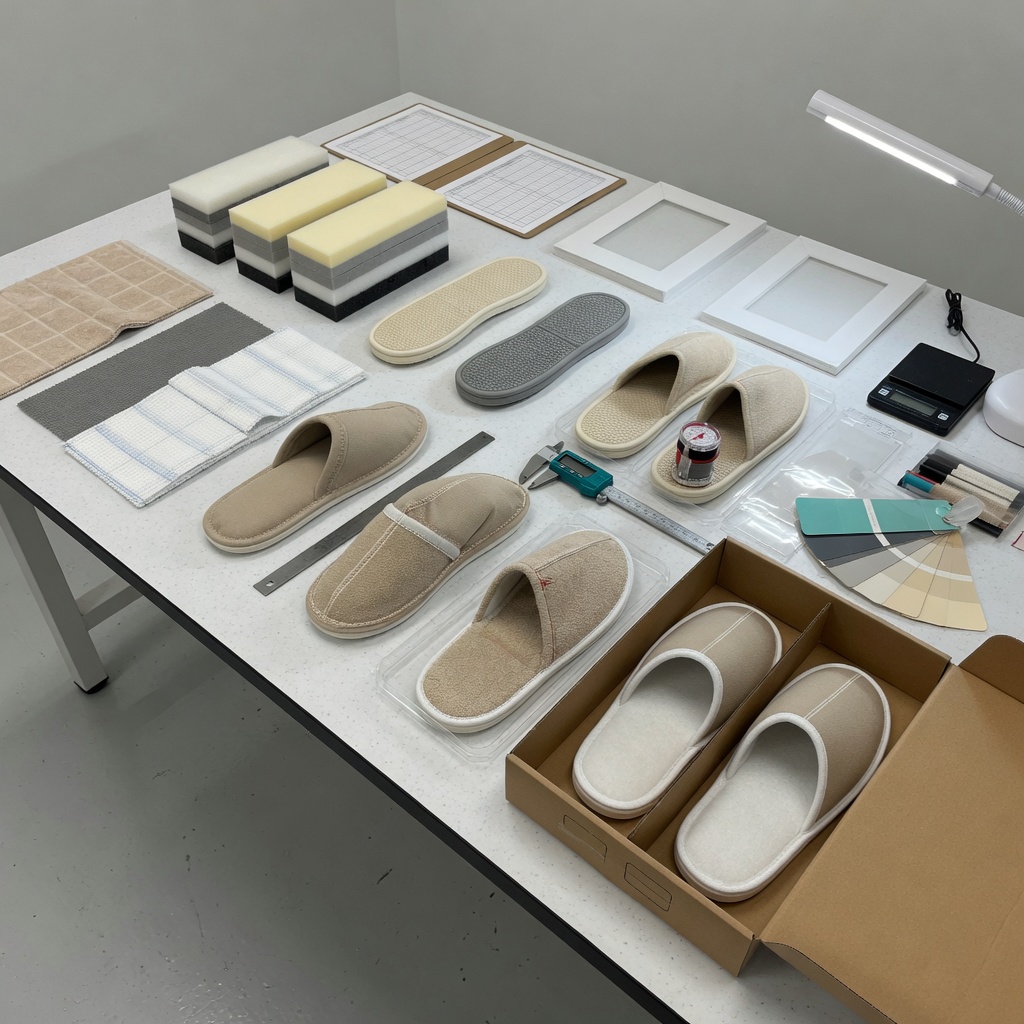
For United States procurement teams, hotel slipper sourcing product development capability means turning one buyer brief into a production-ready, revision-controlled package. The specification, physical sample, bill of materials, artwork, packaging, quotation, quality plan, labeling inputs, and delivery basis should all describe the same proposed hotel slipper.
The buying decision is not whether a prototype looks acceptable in isolation. It is whether the supplier can document how that prototype will be reproduced, inspected, packed, quoted, and delivered without unapproved substitutions or unresolved assumptions.
Use the RFQ to establish that evidence before purchase-order release. Hold the decision when material identity, dimensions, tolerances, claims, labeling inputs, cost components, sample revisions, inspection criteria, or delivery responsibilities remain unclear.
The cited commercial articles support the selection of sourcing topics, but they do not verify a supplier, product, quotation, test result, or United States legal conclusion. The controls below are buyer-side recommendations derived from those topics.
Product Development Capability Evidence for United States RFQs
The source contexts define a limited evidence boundary. Oya Textile discusses materials, sizing, construction, branding, packaging, minimum quantities, and sample adjustment as customization topics. UTOP presents the upper, lining, cushioning, outsole, construction, sizing, branding, and packaging as connected specification choices. Mapper Shoe links material selection with thickness, texture, customization, minimum quantities, delivery, supply continuity, and inspection.
Those pages help identify what an RFQ should examine. They do not establish that a particular supplier can execute the proposed order. Require order-specific evidence at each decision gate.
| Decision gate | Evidence to request | Advance when | Hold when |
|---|---|---|---|
| Brief-to-spec conversion | Controlled specification covering intended use, components, construction, finished dimensions, tolerances, decoration, packaging, and requested performance | Each requested feature has a measurable field, unit, responsibility, and disclosed assumption | Descriptive terms replace measurable requirements |
| Development feasibility | Written review of material availability, variant minimums, construction limits, decoration method, packaging, testing, cost dependencies, and schedule dependencies | Conflicts and alternatives are disclosed before sample authorization | Customization is promised without constraints or deviation records |
| Sample traceability | Sample identifier, revision record, material codes, measurements, artwork version, packaging version, photographs, and open-issue log | The physical sample and records refer to the same revision | The sample lacks a material basis, measurement record, or change history |
| Commercial alignment | Recurring and nonrecurring charges, variant-level minimums, currency, payment terms, quote validity, delivery term, named place, and exclusions | The quotation references the proposed specification and sample revision | Price relies on a different material, quantity, package, or delivery basis |
| Production transfer | Bill of materials, approved references, process controls, defect definitions, inspection instructions, and release authority | The production package explains how the approved sample will be reproduced and judged | Quality or construction details are deferred until bulk production |
| Repeat-order control | Material codes, lot traceability, retained reference, change-notice procedure, and reapproval triggers | Defined changes require written buyer approval before use | Substitutions are unrestricted or the production basis cannot be traced |
A visually acceptable sample does not pass if its construction, measurements, packaging, quotation, or production controls are undocumented. Documents also do not replace approval of the corresponding physical sample.
Lock the Hotel Slipper Specification Before Sampling
A useful specification converts each product choice into fields that can be quoted, sampled, inspected, and repeated. Avoid relying on terms such as standard size, thick sole, premium material, or good grip unless the RFQ defines how each term will be measured and accepted.
| Specification area | Buyer-controlled RFQ fields | Supplier evidence |
|---|---|---|
| Intended hotel use | Distribution point, floor conditions, storage conditions, expected wear pattern, intended user, and whether reuse or laundering is contemplated | Written use-case acknowledgment and proposed construction |
| Components | Upper face, backing, lining, cushioning layers, outsole, thread, bonding input or stitching process, trims, decoration, individual package, and master carton | Component records, swatches, bill of materials, and corresponding sample |
| Finished dimensions and mass | Centerline length in millimeters, forefoot width in millimeters, opening width in millimeters, upper height in millimeters, pair mass in grams, pair-matching rule, and tolerance for each field | Dimensioned drawing and measurement report tied to the sample identifier |
| Cushioning and outsole | Layer sequence, material codes, target thickness in millimeters at named locations, tolerances in millimeters, tread geometry, flexibility criterion, attachment method, and any buyer-selected performance test | Cross-section sample, outsole sample, construction record, measurements, and test proposal |
| Workmanship | Stitch or bond requirements, seam path, edge finish, symmetry, loose-thread rule, contamination rule, repair policy, and visual defect references | Close-up sample images, process description, workmanship reference, and inspection instruction |
| Branding | Controlled artwork, execution method, color reference, dimensions in millimeters, position, orientation, placement tolerance in millimeters, and approval version | Decorated sample, artwork proof, production control point, and inspection method |
| Individual packaging | Package material and construction, closure, product orientation, protection requirement, artwork version, dimensions in millimeters, mass in grams, and proposed markings | Physical package sample, dieline, material declaration, and pack-out record |
| Master carton | SKU and pair configuration, internal arrangement, carton dimensions in the agreed unit, net mass, gross mass, shipping marks, and quantity-variance rule | Packing specification and completed logistics record |
Every dimensional requirement should state the target, tolerance, unit, measurement location, instrument, sample condition where relevant, recording precision, and response to a failed result. A material name alone does not define construction. For an EVA or PVC outsole proposal, for example, the RFQ should separately control material code, thickness, texture, flexibility, tread, attachment, and substitution.
The bill of materials should distinguish the visible upper from backing and lining layers, and it should identify cushioning, outsole, thread, bonding inputs, trims, decoration, and packaging separately. The supplier should disclose whether each component is stock or made to order, any component-level minimum, and any dependency that could affect sampling or repeat production.
No technical standard is prescribed by this article. If the buyer adds one, record its exact title, applicable edition, product scope, method, and acceptance rule. Keep the standard's stated requirement separate from the buyer's own practice or tighter threshold. Do not treat a supplier as certified unless a current document identifies the holder, issuer, covered product or scope, issue date, and validity.
United States Labeling and Claim Inputs
Make United States review inputs an explicit RFQ deliverable. Request product-specific drafts of proposed product markings, individual-pack labels, master-carton marks, material and country-of-origin data, claim language, SKU or lot fields, and shipping documents. The quotation and sample record should identify the construction to which those drafts apply.
Treat the submitted material as review input, not proof of legal sufficiency. No authoritative customs ruling, tariff source, labeling opinion, or claim-specific legal source was supplied for this article. It therefore makes no determination about classification, duty rate, marking placement, warning language, or claim validity.
Before purchase-order release, assign the actual construction, materials, intended use, packaging, origin facts, and proposed claims to the buyer's designated importer, customs adviser, or legal adviser. Record the resulting product-specific decisions in the controlled specification and purchase order.
Keep environmental, recycled-content, antimicrobial, flame-resistance, washability, durability, and traction claims out of approved artwork until the buyer has accepted the exact wording and supporting product-specific evidence. If a performance claim is material to the purchase, define the method, applicable edition, sample revision, preparation, test condition, reporting unit, acceptance rule, responsible party, and report-validity requirement.
Sample, Quality, and Change Control
The RFQ should define a sample sequence suited to the product, such as initial development, correction when required, preproduction approval, and a retained production reference. This is a recommended buyer control, not evidence that a supplier already follows the sequence.
Each submitted sample should have:
- A unique identifier and revision status.
- Material and component codes linked to the proposed bill of materials.
- Measurements tied to stated targets, units, locations, tolerances, and methods.
- Controlled artwork, color, decoration, and packaging references.
- Dispatch, receipt, review, deviation, and approval records.
- Photographs linked to the same sample identifier.
- A list of open issues and the event authorizing the next stage.
Define document precedence in the purchase order. If the physical sample, specification, drawing, bill of materials, artwork, packaging file, quotation, or correspondence conflicts, the agreement should identify which record governs and who can approve a deviation.
Before production, require an inspection plan that defines the lot, unit of inspection, selection method, buyer-entered sample quantity, checks performed, defect categories, acceptance and rejection thresholds, evidence package, corrective-action process, reinspection responsibility, and shipment-release authority. Product-specific checks may include dimensions, pair matching, symmetry, outsole thickness, tread consistency, stitch or bond condition, loose fibers, contamination, color agreement, decoration placement, pack integrity, SKU quantity, carton configuration, and shipping marks.
For repeat orders, require traceability connecting material batches, production lot, approved sample revision, inspection result, shipment, and retained reference. Material source, composition, thickness, color, process, tooling, decoration, packaging, or production-location changes should trigger the notification and reapproval process defined in the purchase terms.
Landed Cost and Delivery Controls for United States Procurement
Compare quotations on the same SKU matrix, ordered quantity, currency, payment terms, packaging basis, delivery term, named place, quote-validity period, and cost denominator. Separate finished-product cost from development, setup, tooling, packaging, testing, inspection, international transport, cargo insurance, customs-related allowances, brokerage, and United States domestic delivery.
The following figures are illustrative procurement assumptions created for this article, not supplier prices, market benchmarks, tariff advice, or current freight data. Their scope is a hypothetical United States order for 10,000 ordered pairs delivered to one named receiving point, with an as-of date of March 6, 2025. Every input must be verified in the current supplier quote and applicable third-party quotation or adviser record before award.
| Cost input | Example calculation | Source, scope, date, and verification |
|---|---|---|
| Finished hotel slippers | USD 0.82 per ordered pair x 10,000 ordered pairs = USD 8,200 per hypothetical order | Illustrative assumption created for this article as of March 6, 2025 for the stated United States order; verify against the supplier quote and approved construction |
| Individual packaging | USD 0.07 per ordered pair x 10,000 ordered pairs = USD 700 per hypothetical order | Illustrative assumption created for this article as of March 6, 2025 for the stated United States order; verify against the supplier quote and approved packaging |
| Development and setup | USD 600 per hypothetical order / 10,000 ordered pairs = USD 0.06 per ordered pair | Illustrative assumption created for this article as of March 6, 2025 for the stated United States order; verify recurring and nonrecurring charges in the supplier quote |
| International freight and cargo insurance | USD 2,100 per hypothetical shipment / 10,000 ordered pairs = USD 0.21 per ordered pair | Illustrative assumption created for this article as of March 6, 2025 for the stated United States order; verify the supplier's delivery basis and current freight and insurance quotations |
| Customs and brokerage allowance | USD 1,500 per hypothetical customs entry / 10,000 ordered pairs = USD 0.15 per ordered pair | Illustrative assumption created for this article as of March 6, 2025 for the stated United States order; verify supplier-provided product inputs and replace the allowance with product-specific adviser and broker inputs |
| United States domestic delivery | USD 900 per hypothetical shipment / 10,000 ordered pairs = USD 0.09 per ordered pair | Illustrative assumption created for this article as of March 6, 2025 for the stated United States order; verify against the current delivery quotation for the named receiving point |
| Listed-input total | USD 14,000 per hypothetical order / 10,000 ordered pairs = USD 1.40 per ordered pair | Arithmetic derived from the listed illustrative assumptions as of March 6, 2025 for the stated United States order; verify every input and add applicable omitted charges before award |
Use landed spend per accepted pair received for the final comparison. Recalculate the denominator for shortages, rejected goods, credits, replacements, and buyer-approved quantity variances. Add applicable tooling, testing, inspection, storage, demurrage, correction, disposal, or rework costs that are absent from the illustration.
Do not convert the illustrative customs allowance into a tariff claim. Obtain product-specific classification, customs value, duty treatment, fee, and brokerage inputs for the actual transaction. Freight analysis should use the submitted carton configuration, dimensions, net mass, gross mass, loading assumptions, transport mode, delivery term, and named place.
Control delivery through defined milestones instead of relying on an unsupported total lead-time promise.
| Milestone | Supplier response required | RFQ control |
|---|---|---|
| Feasibility and sampling | Start event, open dependencies, included components, dispatch commitment, and courier responsibility | Sampling does not begin against an unresolved brief |
| Buyer correction | Revision basis, replacement-sample requirement, responsible party, and effect on quotation or schedule | Changes enter the controlled revision record |
| Material readiness | Availability confirmation, approval status, and substitution restriction | Production timing is tied to approved materials |
| Preproduction release | Required sample and documents, approval authority, and release event | Bulk production cannot begin on undocumented approval |
| Bulk production | Start trigger, completion basis, order-specific capacity response, and progress evidence | The production window has a defined trigger and scope |
| Inspection and correction | Inspection point, report timing, correction allowance, reinspection responsibility, and release authority | Failed goods are not released automatically |
| Cargo handoff | Delivery term, named place, responsibility transfer, document package, and transport assumptions | Cost, risk, and schedule responsibilities are visible |
| United States delivery | Customs-input owner, domestic carrier basis, receiving point, appointment requirements, and proof of delivery | Final delivery is distinct from cargo handoff |
Each quoted duration should identify whether it uses working days or calendar days, the event that starts it, buyer-dependent inputs, excluded delay causes, and the effect of revisions, failed inspections, material changes, document corrections, or transport changes.
Practical Hotel Slipper RFQ Checklist
Attach this checklist to the RFQ and require the supplier to answer every line with a proposed value, unit where applicable, evidence reference, exception, cost effect, and schedule effect. A blank field, unqualified acceptance, or response marked only as standard should remain open until clarified.
Product and Development Package
- [ ] Confirm the intended hotel use, floor conditions, storage conditions, expected wear pattern, and whether reuse or laundering is contemplated.
- [ ] Return the completed SKU matrix with each size, color, construction, decoration, packaging variant, and variant-level minimum identified.
- [ ] Submit the bill of materials with separate codes for the upper face, backing, lining, cushioning, outsole, thread, bonding inputs, trims, decoration, and packaging.
- [ ] State whether every component is stock or made to order and disclose availability, minimums, dependencies, and proposed alternatives.
- [ ] Provide target finished dimensions, tolerances, units, measurement locations, instruments, and failed-result responses.
- [ ] Identify outsole material, material code, thickness, tread, flexibility criterion, attachment method, and substitution restriction.
- [ ] Describe the decoration method, artwork version, color reference, dimensions, position, orientation, and placement tolerance.
- [ ] Identify development charges, setup charges, tooling, sample charges, correction-sample terms, and which charges recur.
Sample, Quality, and Production Transfer
- [ ] Assign every sample a unique identifier and revision linked to its bill of materials, measurement report, artwork, package, photographs, and open-issue log.
- [ ] State the sample sequence, start event, buyer inputs, dispatch commitment, correction process, and approval required before bulk production.
- [ ] Provide workmanship and defect references covering symmetry, stitch or bond condition, edge finish, loose fibers, contamination, pair matching, decoration, and package integrity.
- [ ] Return the proposed inspection plan with the lot definition, selection method, buyer-entered sample quantity, checks, defect categories, thresholds, evidence package, and release authority.
- [ ] Confirm material-batch and production-lot traceability and identify the retained production reference.
- [ ] Accept written notice and buyer reapproval controls for changes to material source, composition, thickness, color, process, tooling, decoration, packaging, or production location.
United States Labeling and Documentation
- [ ] Submit proposed product markings, individual-package labels, master-carton marks, country-of-origin data, claim language, lot fields, and shipping-document drafts.
- [ ] Identify the exact product construction and sample revision to which each marking, label, origin statement, or claim applies.
- [ ] Disclose the evidence offered for any environmental, recycled-content, antimicrobial, flame-resistance, washability, durability, or traction claim.
- [ ] Leave final United States classification, duty, marking, warning, and claim decisions subject to the buyer's designated importer, customs adviser, or legal adviser.
- [ ] Provide current documents for any claimed certification, including holder, issuer, covered product or scope, issue date, and validity; do not substitute a general statement of compliance.
Price, Landed Cost, and Delivery
- [ ] Quote against the controlled specification and sample revision, with currency, payment terms, ordered quantity, quote validity, delivery term, named place, and exclusions.
- [ ] Separate finished-product, development, setup, tooling, packaging, testing, inspection, transport, insurance, brokerage, and domestic-delivery charges.
- [ ] Provide individual-package and master-carton dimensions, net mass, gross mass, SKU quantity, pair configuration, and loading assumptions for freight review.
- [ ] Identify each delivery milestone, its start event, whether duration uses working or calendar days, dependencies, responsible party, and completion evidence.
- [ ] State the inspection, correction, reinspection, cargo-handoff, customs-input, domestic-delivery, and proof-of-delivery responsibilities.
- [ ] Describe remedies and decision authority for delay, failed inspection, unauthorized substitution, shortage, rejected goods, and reinspection.
Award Decision
- [ ] Verify that the specification, physical sample, bill of materials, artwork, packaging, quotation, inspection plan, and delivery basis all reference the same approved revision.
- [ ] Record every exception, accepted deviation, responsible approver, and resulting cost or schedule effect in writing.
- [ ] Hold purchase-order release until mandatory labeling, claims, inspection, landed-cost, delivery, traceability, and change-control inputs are closed.
Advance: The specification, sample, bill of materials, artwork, packaging, quotation, production controls, United States review inputs, landed-cost basis, and delivery milestones align, with mandatory issues closed in writing.
Hold for clarification: Evidence is missing or inconsistent, but the missing record, responsible party, corrective response, and release condition can be identified without accepting an unauthorized change.
Do not release the purchase order: The supplier will not disclose the production basis; the quote and sample use different inputs; substitutions remain uncontrolled; labeling or claim review is unresolved; inspection or change authority is undefined; or cost and delivery assumptions cannot be normalized.
Methodology and Limitations
Methodology: The supplied commercial pages were reviewed only for sourcing topics that could be converted into requestable procurement evidence. Oya informed the material, sizing, construction, branding, packaging, minimum-quantity, and sampling fields. UTOP informed the connected component-specification structure. Mapper informed the links among material, thickness, texture, customization, delivery, continuity, and inspection. Those topics were mapped to buyer-controlled specification fields, sample records, approval gates, quotation inputs, change controls, and inspection evidence. The landed-cost illustration was derived only by multiplying, allocating, adding, and dividing the assumptions explicitly labeled in its table.
Author basis: The SlipperForge author profile supports the visible author name and Editorial Author role. It does not provide a basis for product tests, factory observations, supplier audits, procurement outcomes, or first-person experience claims, so none are asserted here.
Limitations and verification: The cited commercial articles are not independent laboratory studies, legal opinions, customs rulings, supplier audits, current quotations, or product-specific conformity evidence. No supplier capacity record, current certification, shipment result, tariff determination, legal labeling review, factory assessment, or test report was supplied. Before award, verify the finished specification, physical sample revisions, materials, production scope, current quotation, test evidence, document validity, labeling and claim decisions, customs inputs, freight assumptions, inspection terms, change controls, remedies, and signed purchase terms with the responsible supplier and qualified United States advisers.
Discuss Your Requirements
Review our manufacturing capabilities, then share your specifications for a supplier-fit review.