Hotel Slipper OEM Batch Traceability Plan for United States Buyers
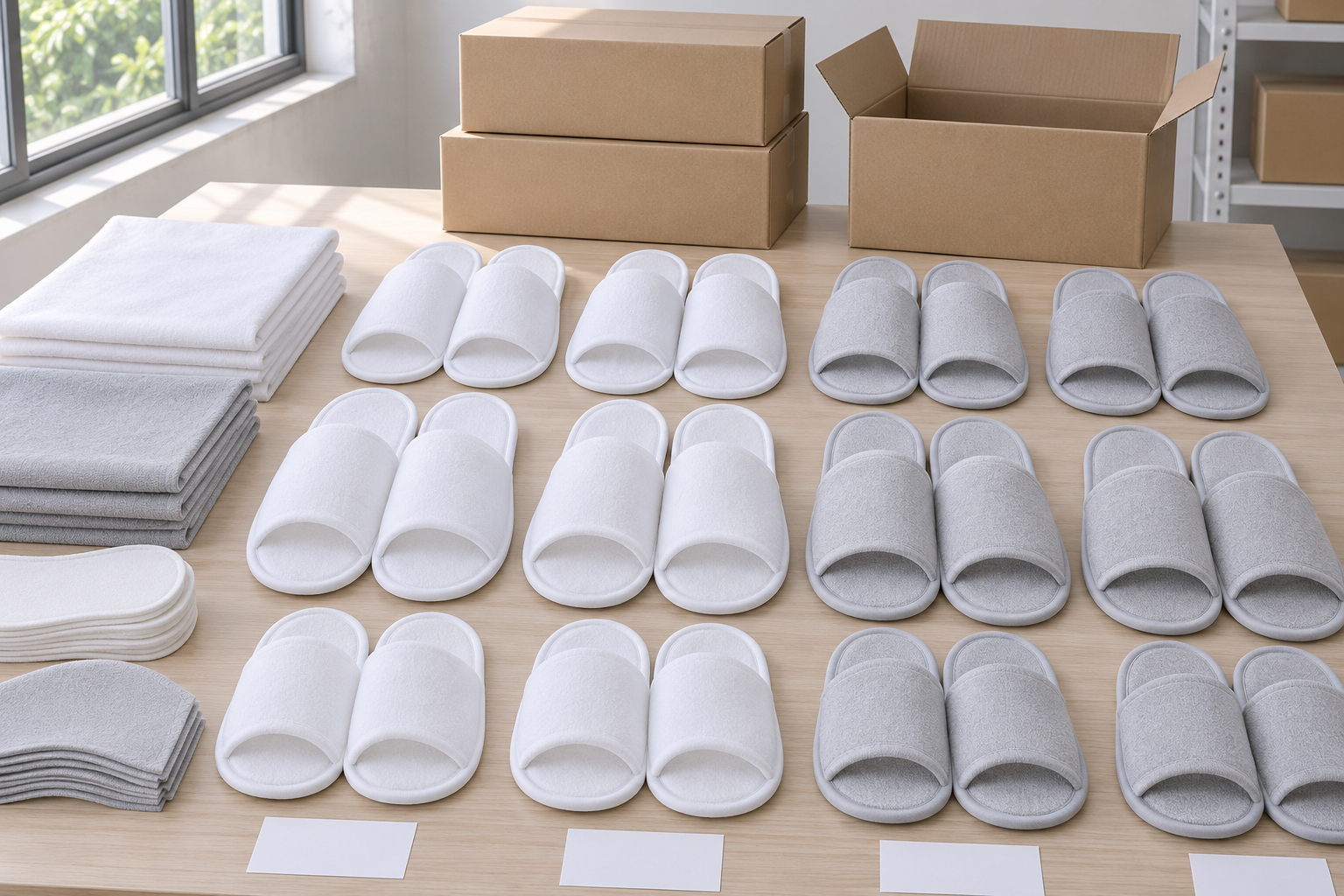
A hotel slipper OEM batch traceability plan gives a United States buyer a clear way to link an order to the materials, production records, labeling, packing, and delivery records that belong to that order. The plan does not replace a product specification, a packing instruction, or an inspection record. It connects those records so that a question about one delivery can be answered from the records for that batch, rather than from a general description of how hotel slippers are made. For a buyer, the value is practical. When a delivery arrives with a labeling question, a size mix question, a color question, or a packing question, the buyer can ask for the batch record, compare it with the agreed specification, and decide whether the issue affects one carton, one size, one color, or the whole order.
The plan works best when it is agreed before production starts. The buyer and the supplier agree what a batch means for that order, what fields will be recorded for each batch, how each carton will be labeled, who will keep each record, and how the records will be shared when a question arises. Those agreements belong in the order documents and in the RFQ, so the supplier can confirm the record keeping method before the buyer places the order. A plan agreed after production has started is harder to apply, because material and production details may already have been recorded in a different form, or may not have been kept in a form that can be linked to the finished cartons.
What a Hotel Slipper OEM Batch Traceability Plan Should Record
A batch traceability plan for hotel slipper manufacturing starts with a clear definition of a batch. For one order, a batch can be defined by the order number, the agreed product description, the size range, the color, and the production run that the supplier and buyer agree to treat as one group. The definition should also state whether a change in material lot, color lot, sole material, upper material, or packing material creates a new batch, or whether the batch remains the same when only the packing date changes. Without that agreement, two people can use the same batch number to mean different groups of slippers, and the record will not help the buyer separate a limited issue from a wider one.
Material records form the next part of the plan. The buyer should ask the supplier to record the material lot or delivery lot for the upper fabric, the lining, the sole material, the binding, and any other material that the agreed specification names. The record should show which material lot was used for which batch, and whether more than one material lot was used inside one batch. When a material lot changes during production, the record should show where the change took place in the batch sequence, so the buyer can see which cartons used the earlier lot and which cartons used the later lot. The buyer should also ask how material lots are stored and identified before production, so that material from an earlier order is not mixed into a new batch without a record of that change.
Production records link the material record to the finished slippers. The plan should name the production records that will be kept for each batch, such as the production date or date range, the production line or work area, the size and color sequence, and the packing sequence. The record should show the quantity packed for each size and color inside the batch, and the carton numbers that belong to that size and color. That link allows the buyer to move from a carton label to the batch record, and from the batch record to the material lots and production sequence for that carton. The plan should also state how rework is recorded. When slippers are repaired, rechecked, or repacked, the record should show the original batch, the reason for the rework, and the new carton number if the carton changes.
Batch Traceability Plan Controls for United States Hotel Slipper Manufacturing
For United States hotel slipper manufacturing orders, the buyer should treat labeling as part of traceability, not as a separate packing detail. The buyer and supplier should agree the fields that will appear on each carton label, and the fields that will appear on any inner pack label when inner packs are used. Useful fields include the order number, the batch number, the product description as agreed in the specification, the size, the color, the quantity in the carton, and the packing date or packing sequence. The buyer should also agree whether the label will use a printed batch number, a handwritten batch number, or another agreed method, and how the supplier will check that the label on the carton matches the slippers inside the carton.
Labeling controls should include a check before dispatch. The buyer can ask the supplier to describe who checks the labels, when the check takes place, and what happens when a label does not match the packing record. The buyer can also ask for a sample label to be approved before production, so that the label layout, the field order, and the wording can be agreed in advance. When the buyer approves a label, the approval should record the label version, the date of approval, and the fields that were approved, so that a later change in label wording can be identified as a change rather than treated as a minor variation.
Landed cost and delivery records also belong in the plan, because a traceability question often arrives at the same time as a delivery question. The buyer should ask the supplier to separate the cost fields that make up the landed cost for the order, such as the product cost, the packing cost, the freight cost, the handling cost, and any other charge that the supplier and buyer agree to list separately. The buyer should ask how those fields will be shown on the supplier documents, and whether a change in packing, quantity, or delivery method will change the listed fields. For delivery, the buyer should agree how the shipment will be identified, how carton numbers will be listed on the packing list, and how the packing list will be linked to the batch record. When a delivery contains more than one batch, the packing list should show which cartons belong to each batch, so the buyer can receive and store each batch without opening every carton to find the batch number.
The plan should also cover record retention and sharing. The buyer and supplier should agree how long batch records will be kept, in what form they will be kept, and how the buyer can request a copy of a batch record after delivery. The agreement should name the contact point for traceability questions, the information the buyer should provide when asking for a record, and the form in which the supplier will provide the record. A clear retention and sharing agreement helps the buyer answer a hotel, distributor, or internal team question after the slippers have been received and distributed, when the original packing list may no longer be with the cartons.
How to Compare Supplier Traceability Records Before Ordering
A buyer can compare suppliers by asking each supplier to describe the same traceability process in the same terms. The buyer should ask how a batch is defined, how material lots are recorded, how production and packing records are linked to carton numbers, how labels are checked, and how records are shared after delivery. A supplier description that names the records, the fields, and the person responsible for each record gives the buyer more to compare than a general statement that records are kept. The buyer should also ask for a sample batch record form, a sample carton label, and a sample packing list, so the buyer can see whether the fields match the fields named in the RFQ.
The buyer should look for gaps that would make a later question hard to answer. One gap is a batch number that appears on the carton but does not appear on the production record. Another gap is a material record that names a material type but does not link the material lot to a batch. A further gap is a packing list that shows total quantity but does not show quantity by size, color, and batch. A further gap is a label that shows size and color but does not show the batch number or order number. Each gap should be raised as a question before ordering, and the supplier response should be recorded as part of the agreed plan, rather than left as an informal understanding.
The buyer should also compare how changes are handled. The plan should state what happens when a material lot changes, when a size sequence changes, when a label changes, or when a carton is repacked. The buyer should ask whether a change creates a new batch number, a new label version, or a note on the existing batch record. The buyer should ask how the change will be communicated before dispatch, and how the packing list will show the change. A plan that treats every change in the same way, without naming the record for each type of change, leaves the buyer unable to tell whether a delivery contains one batch or several batches that were combined during packing.
When the buyer has compared the responses, the buyer can select the supplier whose record structure matches the buyer need, rather than the supplier whose general description sounds most complete. The buyer should record the agreed batch definition, the agreed label fields, the agreed packing list fields, and the agreed record sharing method in the order documents. That written agreement becomes the reference for receiving, checking, and asking questions about the delivery, and it gives both sides a shared record of what was agreed before production started.
Buyer Decision Table for a Hotel Slipper OEM Batch Traceability Plan
| Decision area | Agreed record | Buyer action before ordering |
|---|---|---|
| Batch definition | Order number, product description, size range, color, and production run treated as one batch | Ask the supplier to confirm in writing what creates a new batch |
| Material record | Material lot for upper, lining, sole, binding, and other agreed materials linked to each batch | Ask the supplier to show a sample material record form |
| Production record | Production sequence, size and color sequence, packed quantity, and carton numbers for each batch | Require the manufacturer to describe how production and packing records are linked |
| Labeling and packing | Carton label fields, inner pack label fields when used, and label approval record | Specify the label fields and ask for a sample label for approval |
| Delivery and receipt | Packing list showing carton numbers by batch, size, and color, with landed cost fields listed separately | Ask the supplier to show a sample packing list and cost breakdown form |
| Issue handling | Record for rework, repacking, label correction, and batch record sharing after delivery | Require the manufacturer to name the contact point and the record sharing method |
RFQ Checklist
- Ask the supplier to define a batch for this hotel slipper order and to confirm what change creates a new batch number.
- Require the manufacturer to record each material lot against the batch that used it and to show where a material lot change took place.
- Specify the carton label fields, the inner pack label fields when used, and the label approval record for this order.
- Ask the supplier to link each carton number to its batch, size, color, and packed quantity on the packing list.
- Require the manufacturer to list landed cost fields separately and to confirm how a change in packing or delivery will be shown.
- Specify the record retention period, the record sharing method, and the contact point for batch questions after delivery.
- Ask the supplier to describe how rework and repacking will be recorded and how a corrected carton will be identified.
Agree the Plan Before Production Starts
A hotel slipper OEM batch traceability plan is most useful when it is treated as an ordering agreement, not as a document created after a question arises. The buyer should use the RFQ to ask for the batch definition, the material record form, the production record form, the label sample, the packing list sample, and the record sharing method. The supplier response should be compared on the same fields, and the agreed version should be written into the order. When the delivery arrives, the buyer can check the carton labels against the packing list, check the packing list against the batch record, and ask for the material record when a question needs that level of detail. That sequence gives a United States buyer a practical way to manage hotel slipper orders, to separate a limited issue from a wider one, and to keep the records needed for later questions about the same order.
Discuss Your Requirements
Review our manufacturing capabilities, then share your specifications for a supplier-fit review.