Disposable Slipper OEM Product Development Capability for Australian Buyers
By Vincent Xi, Editorial Author
For an Australian business buyer, disposable slipper OEM product development capability is best assessed by whether a supplier can translate the product brief into a controlled specification, representative sample, manufacturing plan and commercially aligned quotation. Catalogue breadth, material labels and general assurances do not establish whether the quoted packed product can be reproduced.
The supplied sources identify material fit, branding, packaging, MOQ, lead time, sample development, capacity, quality control and logistics as sourcing topics (SJC sourcing guide; JSH supplier page; YC Footwear factory-selection article). They support the evaluation framework below, but they do not verify the current capability, materials, commercial terms or delivery performance of any manufacturer.
Release principle: Keep the product specification, artwork, packaging specification, approval sample, quality plan, quantity allocation and Australian delivery quote on the same revision. Record each deviation and close it before the affected manufacturing release.
Product development capability gates for Australian RFQs
Use the RFQ to test how the supplier converts requirements into controlled manufacturing inputs. The following gates are proposed buyer controls, not claims that a particular supplier already follows them.
| RFQ gate | Supplier return | Evidence to review | Hold release when |
|---|---|---|---|
| Brief translation | Restated application, construction, materials, dimensions, branding, packaging and delivery assumptions | Completed brief with assumptions and exclusions identified | An undisclosed assumption changes the quoted product |
| Controlled product definition | Dimensioned product sheet, component identities, artwork record and packaging specification | Documents carrying matching revision identifiers | Marketing terms replace measurable requirements |
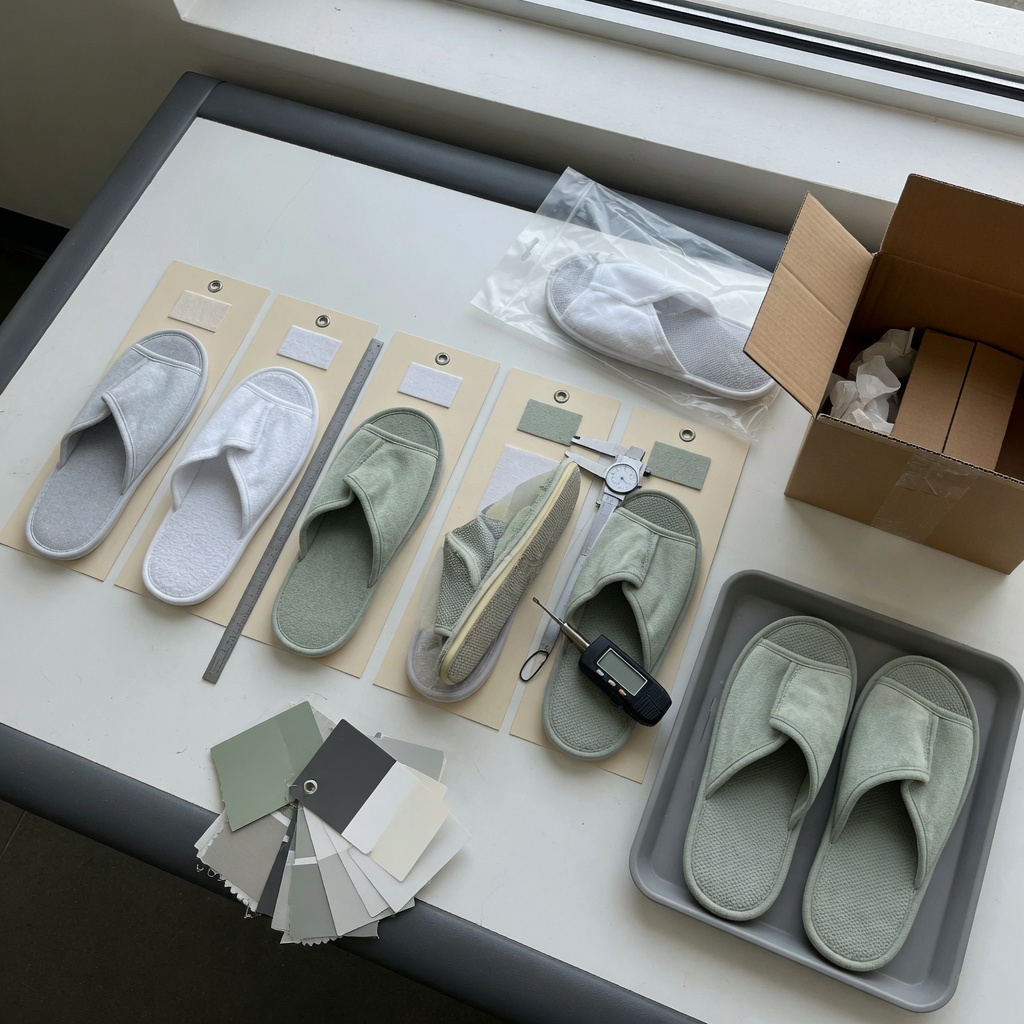
| Sample development | Sample status, material and process declaration, measurements and deviation list | Traceable sample record linked to the quoted revision | Temporary materials or manual processes are not disclosed |
| Manufacturing control | Order-specific quality plan, inspection stages, defect rules and report format | Blank report format and acceptance criteria | Acceptance criteria will be decided only after production |
| Commercial and delivery alignment | Variant MOQ, scoped capacity, timing triggers, charges, packed-product data and Australian delivery scope | Quotation tied to the same product and packaging revision | Quantity, handoff point or packed configuration remains unclear |
Classify each gate as conforming, conditional or non-conforming. A conditional result should identify the missing record, its owner and the point before which it must be resolved.
Practical RFQ checklist for Australian buyers
Use this checklist as the controlled cover sheet for the supplier enquiry. Require the supplier to answer every item and mark any unsupported requirement as a deviation rather than leaving it blank.
- [ ] Record the RFQ reference, buyer entity, intended application, Australian delivery destination and requested quantity allocation by product variant.
- [ ] State the required toe format, upper geometry, binding, layer sequence, joining method and pair presentation.
- [ ] Identify every component by material description, supplier code, finish, backing and colour reference where applicable.
- [ ] Attach a dimensioned product sheet defining each datum, nominal value, unit, tolerance and measurement method.
- [ ] Define the sole construction, layer identities, thickness measurement locations and compressed or uncompressed measurement condition.
- [ ] Attach the controlled artwork revision and specify its application process, placement, orientation, colour reference and permitted variation.
- [ ] Define the unit pack, closure, pair orientation, shipping-carton configuration and required pack data.
- [ ] Ask the supplier to identify which proposed materials and processes are production grade and to disclose every temporary sample substitution.
- [ ] Request material or artwork, construction and production-representative sample statuses with the approval decision supported by each submission.
- [ ] Require a sample record containing product, artwork and packaging revisions, component codes, measured results, deviations and release conditions.
- [ ] Request MOQ allocation by applicable style, colour, size, material, artwork and packaging revision.
- [ ] Request separate sample and bulk timing, including the start trigger, manufacturing stages, dispatch scope and exclusions.
- [ ] Require itemized pricing for the product, sampling, setup, tooling, printing, packaging and optional charges.
- [ ] Request an order-specific quality plan, defect rules, sample-selection rule, inspection stages and blank report format.
- [ ] Request current, scope-matched evidence for any composition, performance, conformity or certification claim.
- [ ] Require written approval before any material, process, artwork, packaging or manufacturing-location change affecting the quoted product.
- [ ] State the manufacturing dispatch point, Australian destination, freight services, exact handoff point, routing assumptions and quote validity.
- [ ] Tie the final supplier response, sample approval, quotation and purchase order to matching product, artwork and packaging revisions.
The completed checklist should show the supplier answer, evidence reference, deviation, commercial effect, owner and closure status. Bulk manufacturing remains on hold where a response is missing, conditional or tied to a different revision.
Build a measurable disposable slipper specification
Require every RFQ field to be marked as conforming, deviating, pending, not offered or not applicable. Where a measurement controls acceptance, the supplier response should include the nominal value, unit, tolerance, measurement method and sample result. These are proposed RFQ controls rather than cited industry standards.
| Controlled field | Required RFQ detail | Approval evidence |
|---|---|---|
| Product architecture | Open- or closed-toe format, upper geometry, binding, layer sequence, joining method and pair presentation | Annotated drawing and construction cross-section |
| Component identity | Component name, declared composition or grade, supplier code, backing, finish and colour reference | Component declaration, coded swatch and sample traceability record |
| Finished dimensions | Length, forefoot width, upper coverage and opening measurements in declared units, with tolerances and defined datums | Results recorded against the approved drawing and method |
| Sole construction | Layer identities and nominal thickness at stated locations, including the compressed or uncompressed measurement condition | Location-specific thickness record and sample cross-section |
| Product mass | Loose-pair or packed-pair basis, declared unit and permitted variation where controlled | Equipment record and result identifying whether packaging is included |
| Floor-contact surface | Surface material, pattern, joining method, intended use context and any claimed performance | Defined assessment method, sample identity, conditions and result |
| Branding | Artwork revision, colour reference, application process, placement, orientation and permitted variation | Artwork proof linked to the product sample |
| Unit packaging | Material declaration, closure, pair orientation and required pack data | Packed sample and packaging specification |
| Shipping carton | Pair quantity, dimensions, net mass, gross mass and packing arrangement in declared units | Carton specification tied to the approved packed revision |
| Substitution control | Components and processes that require written approval before change | Change notice covering technical, sample, price, MOQ, carton and timing effects |
The JSH supplier page uses material-category wording, while the SJC sourcing guide identifies product and packaging attributes relevant to brand consistency. Those terms can organize RFQ questions, but they are not complete material specifications or evidence of performance.
Do not approve environmental, comfort or floor-contact performance wording on description alone. Ask the supplier to identify the affected component, exact claim, assessment method, covered sample or document, issuing party, date and limitations. This article provides no default dimensions, tolerances, composition or performance threshold because the supplied sources do not establish suitable technical benchmarks.
Make sample development decision-bearing
The YC Footwear factory-selection article identifies sample development and sample timing as supplier-evaluation topics. Convert that general topic into a sample plan that states what each submission can approve.
| Sample status | Supplier declaration | Buyer decision |
|---|---|---|
| Material or artwork review | Material code, declared composition, colour reference, artwork revision and production-grade status | Accept, revise or reject the proposed input without releasing bulk manufacturing |
| Construction review | Layer build, joining method, measured dimensions and all temporary components or processes | Confirm the architecture or request another revision |
| Production-representative approval | Planned bulk materials, processes, artwork, packaging, measurements and remaining deviations | Release manufacturing only after documented conditions are closed |
The approval record should identify the sample, product revision, artwork revision, packaging revision, component codes, colour references, methods, results, deviations, decision and release conditions. Treat photographs as traceability support rather than approval evidence for composition, thickness, bond condition or exact colour.
Keep a protected physical reference and require the supplier to identify its corresponding retained sample. A proposed change to material, sole layer, logo process or packaging should trigger an updated comparison covering specification, sample status, MOQ allocation, price, carton configuration and timing. The purchase order should cite the released product, artwork and packaging revisions.
Test manufacturability through the quotation
The SJC sourcing guide discusses MOQ and lead time. The YC Footwear factory-selection article discusses MOQ allocation, capacity, samples and lead time. These source topics justify asking for scoped commercial answers; they do not prove any supplier's current terms.
| Commercial field | Required supplier response | Comparison control |
|---|---|---|
| MOQ allocation | Minimum by applicable style, colour, size, material, artwork and packaging revision | Do not accept a blended total that hides variant restrictions |
| Capacity | Available and committed output, declared unit, production location, applicable period and order assumptions | Treat the value as a supplier declaration until supported by current, order-relevant evidence |
| Sample timing | Start trigger, preparation scope, permitted revisions and dispatch scope | Compare timing only after approval inputs are aligned |
| Bulk timing | Material preparation, manufacturing, packing and dispatch stages, with triggers and exclusions | Do not rely on an overall duration without its starting condition |
| Pricing | Unit basis, setup, tooling, printing, sampling, packaging and optional charges | Separate alternatives and revision-dependent costs |
| Commercial scope | Currency, payment triggers, quote validity, included services and exclusions | Normalize offers against the same revision, quantity allocation and handoff point |
The supplier should state whether timing begins after artwork receipt, material confirmation, sample approval, payment, manufacturing release or another event. A lower unit price is not directly comparable when samples, materials, packaging, quantities or freight scope differ.
Connect Australian delivery to the approved packed revision
For an Australian order, product approval and freight comparison should use the same unit-pack and shipping-carton revision. The JSH supplier page discusses logistics as a supplier function, while the SJC sourcing guide identifies lead time as a sourcing topic.
Require the quotation to state:
- Manufacturing dispatch point and named Australian destination
- Included freight services and the exact handoff point
- Routing assumptions, timing triggers and exclusions
- Approved product, unit-pack and shipping-carton revisions
- Carton pair quantity, dimensions, net mass and gross mass with declared units
- Quote currency, validity and adjustment conditions
- Buyer-supplied documents or shipment data assumed by the quotation
Use a current, shipment-specific quotation rather than an unsupported freight allowance. The supplied sources provide no Australia-specific freight rate, transit benchmark, climate requirement, customs rule or labelling requirement. Verify legal, customs, labelling, environmental and climate-related requirements against current sources for the actual product, packaging, route and transaction.
Tie quality evidence to repeat manufacturing
The JSH supplier page and YC Footwear factory-selection article discuss quality control as a supplier-evaluation topic. The buyer's quality plan should convert that broad topic into order-specific acceptance evidence.
For every controlled characteristic, request the requirement, inspection stage, method, equipment, conditioning where relevant, tolerance or defect rule, sample-selection rule, result format, record owner and disposition authority. Obtain a blank inspection-report format during supplier evaluation. The completed record should identify the purchase order, SKU, revision, batch, inspection date, quantity presented, selection basis, findings and disposition.
| Supplier claim | Evidence to request | Insufficient for approval |
|---|---|---|
| Material composition | Component-specific declaration tied to the quoted code and revision | Generic brochure wording or an unlinked declaration |
| Measured characteristic | Defined datum, method, equipment, unit, tolerance and sample-linked result | A value without method or product scope |
| Product performance | Defined method, sample identity, conditions, result, date and issuing party | Unsupported performance wording |
| Standard conformity | Exact standard title, edition, applicable clause or method, covered product and result | A standard reference without scope evidence |
| Certification | Current document showing issuing body, holder, scope, date and covered product or system | Expired, cropped or unrelated documentation |
| Production capacity | Declared unit, location, period, committed load and order assumptions | Undated headline output without product or period scope |
| Sample equivalence | Declaration covering matching materials, process, artwork and packaging, with deviations listed | An unlabelled sample or photographs alone |
If a supplier cites a standard, separate the standard's published requirement from the manufacturer's own procedure. An internal inspection or test is company practice and must not be presented as certification without a current supporting document.
For repeat orders, ask how approved component codes, colour references, artwork, packaging files, retained samples and inspection records are retrieved. Require change notification before affected sampling or manufacturing begins.
Record the RFQ award decision
Use an award record with fields for supplier answer, evidence reference, deviation, commercial effect, owner and closure status. Treat a blank response as missing evidence rather than assumed conformity.
A conforming result has traceable evidence tied to the quoted revision. A conditional result identifies the missing evidence and closure point. A non-conforming result records the mismatch and its commercial or technical effect. Do not release bulk manufacturing until the approved sample, specification, quality plan, quantity allocation, quotation and Australian delivery scope agree.
Evidence method, source context and limitations
Source context: The SJC sourcing guide is commercial sourcing content covering material fit, brand consistency, packaging, MOQ, lead time and quality stability. The JSH supplier page is supplier-authored content discussing material categories, customization, product development, quality control, inventory and logistics. The YC Footwear factory-selection article is commercial factory-selection content discussing specialization, MOQ allocation, samples, capacity, lead time and inspection. These pages support topic selection but are not independent audits of a quoted manufacturer.
Methodology: Explicit topics in the supplied pages were mapped to buyer-controlled RFQ fields, evidence requests, approval records and hold conditions. Source statements are cited as context. The specification fields and release controls are editorial risk controls, not source-attributed industry requirements.
The source text also provides the following countable observations. They describe wording in the supplied evidence and are not technical benchmarks, order requirements or proof of manufacturing range.
| Observed value | Unit and scope | As-of context | Source |
|---|---|---|---|
| 4 | Named material-category labels in the disposable slipper wording: non-woven, terry, velour and eco-friendly | Supplied evidence set for this article revision; source publication date not established | JSH supplier page |
| 5 | Named brand-consistency attributes in the sourcing context: colour, style, texture, packaging and size | Supplied evidence set for this article revision; source publication date not established | SJC sourcing guide |
| 3 | Named MOQ allocation dimensions in the factory-selection context: style, colour and size | Supplied evidence set for this article revision; source publication date not established | YC Footwear factory-selection article |
Limitations and verification: Publication dates were not established from the supplied evidence. The sources do not establish current SlipperForge materials, development procedures, MOQ, capacity, prices, sample timing, test results, certifications, customer outcomes or Australian delivery performance. They also do not establish requirements for a specific Australian transaction. Verify every commercial value in the current supplier quotation, approve a production-representative packed sample, obtain current supporting documents for each material or performance claim, and confirm applicable Australian requirements from authoritative sources.
Author note: The Vincent Xi profile identifies Vincent Xi as Editorial Author. It does not document personal factory visits, product tests or procurement outcomes, and no such experience claim is made here.
Discuss Your Requirements
Review our manufacturing capabilities, then share your specifications for a supplier-fit review.